



A guest post by Micah Erfan.
Virginia Democrats just had one of the most productive legislative sessions in years. With a historic trifecta, the largest House majority in nearly four decades, a Senate majority, and Governor Abigail Spanberger in the Executive Mansion, they came to Richmond with a mandate: make Virginia more affordable for working families.
And so far, they’ve made real progress. Spanberger has signed legislation reining in pharmacy benefit managers, the middlemen who inflate prescription drug prices. Manufactured homes can now be built in more places. High energy users like data centers must now pay for their own infrastructure, shielding ratepayers from those costs. And a free state tax filing program, passed unanimously, means working Virginians no longer have to pay a private company just to file their taxes.
That’s a genuine start. But let’s be honest, it’s only a start. The affordability crisis in Virginia runs deep, and what’s been signed so far has only scratched the surface of what’s possible. Here are 12 proven ideas that would do exactly that.

HOUSING
Rising housing costs are the single biggest driver of financial stress for Virginia families. The diagnosis is simple: we don’t have enough homes. Building more housing, in more places, faster, is the most powerful lever Democrats have, and it doesn’t require a massive government spending program. It requires rolling back the local rules that are currently making affordable development impossible.
1. Reduce minimum lot sizes statewide.
Zoning rules that require large minimum lot sizes artificially restrict how much housing can be built on available land. A developer who wants to build three modest homes on a lot zoned for one simply cannot, not because of economic forces, but because of a government rule.
In some localities, the minimum lot size requirements are truly astounding. In Prince William County’s agricultural zone, the minimum lot size is 10 acres, over 400,000 square feet. For reference, the footprint of a typical townhome is often just 1,400 square feet.
That is not a market outcome. It is a government-imposed ban on affordable housing. And we should be honest about why these rules exist. They are not about safety. They are not about infrastructure. In many cases, they exist because existing homeowners and local officials want to keep housing scarce and expensive. They want to protect their property values. They want to keep working-class people out. That is the uncomfortable truth that too many politicians are afraid to say out loud.
Virginia Democrats should say it. And then they should do something about it.
Virginia should make it illegal for any locality to ban townhomes, capping the minimum lot size any locality can impose at 1,400 square feet. If a locality is using land use laws to price working families out of their community, the state has not just the power but the obligation to stop them.
2. Cap building permit fees.
In parts of Northern Virginia, permit fees and local charges add tens of thousands of dollars to the cost of building a single home. These costs get passed directly to buyers and renters. They are effectively a government tax on housing construction, and they fall hardest on the most affordable end of the market, where margins are thinnest, and developers are most price-sensitive. Capping them statewide puts direct downward pressure on the cost of building homes.
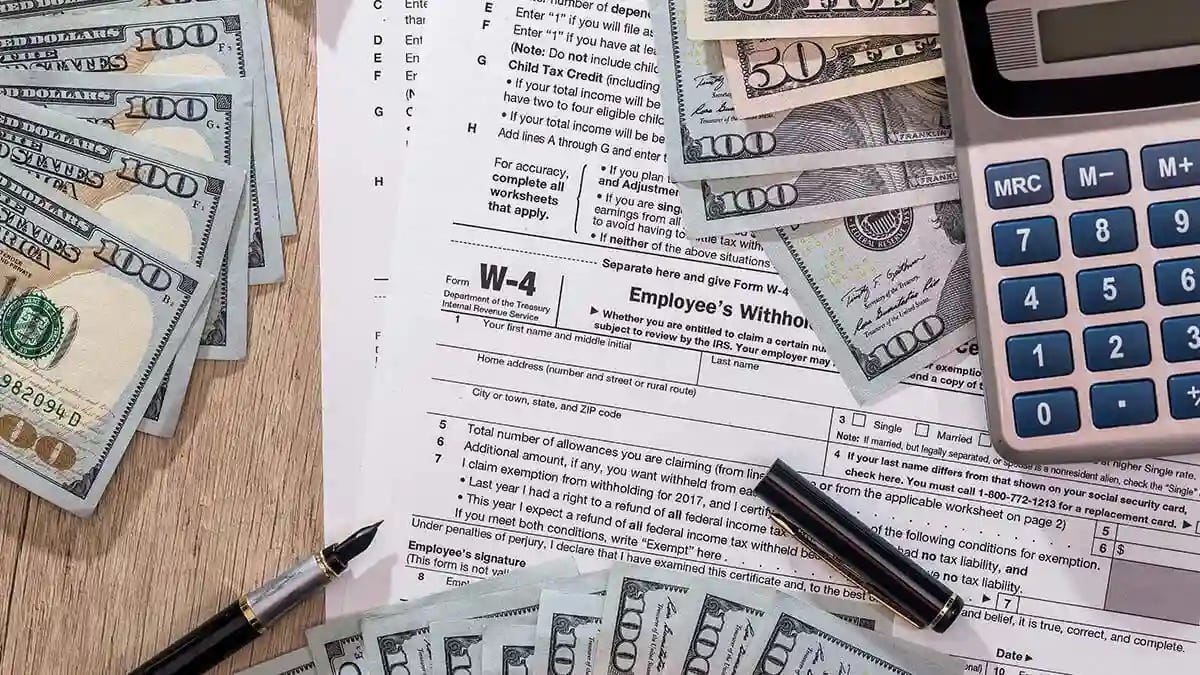
TAX REFORM
3. Implement a split-rate property tax.
A split-rate property tax taxes land at a higher rate than the buildings on it. The logic is straightforward: taxing land value discourages speculation and landbanking, i.e., holding under-built or vacant property in high-demand areas while waiting for values to rise. Taxing buildings less encourages development and improvement. If you are a wealthy investor who owns a surface parking lot in the middle of a thriving neighborhood, your tax bill goes up, which creates real pressure to build something useful. Regular homeowners who actually use their land come out ahead. Renters and new buyers benefit from lower rents and lower housing prices. It is a pro-development, anti-speculation reform that doesn’t require a single dollar of new spending.

HEALTHCARE
Healthcare costs are squeezing Virginia families from every direction, at the pharmacy, in the hospital, and on their insurance bills. The common thread in each of the following proposals is the same: more competition, more transparency, more supply.
4. Allow full independent practice rights for nurses.
Virginia requires nurses to practice under physician supervision even when they are fully qualified to treat patients independently. The result is a government-enforced bottleneck that restricts the supply of care, particularly in rural parts of the state where physician shortages are most severe. Removing that restriction expands access, increases competition, and drives down costs. It is one of the clearest examples of occupational regulation that protects incumbents rather than patients.
5. Open accelerated medical school pathways.
The physician shortage is fundamentally a supply problem, and supply problems have supply solutions. Accelerated three-year MD programs, already piloted in states across the country, can increase the number of practicing physicians faster without reducing the quality of care. More doctors mean more competition. More competition means lower prices. This is not complicated.

CONSUMER PROTECTION
6. Comprehensive junk fee ban and all-in pricing law.
Here is a simple principle that Virginia should put into law: if a fee applies to every single customer, it is part of the price. Period. It must be included in the advertised price, online, in print, at the point of first display, everywhere.
The list of fees this would eliminate is long and familiar. Resort fees and destination fees tacked onto hotel bills. Service fees and order processing fees added at the last step of buying a concert ticket. Apartment admin fees and lease initiation fees charged to every tenant. Telecom regulatory recovery fees buried in the fine print of your phone bill. Healthcare facility fees charged for routine outpatient visits that have nothing to do with the care you received.
These fees exist for one reason: to make the price look lower than it is. They are a form of consumer fraud that has been normalized by the industry. Virginia should follow the lead of other states and make them illegal.
7. Require interchange competition on credit card transactions.
Every time a consumer swipes a card, the merchant pays a fee, typically 2 to 3 percent, to the card network and issuing bank. Those fees are built into the prices of everything you buy, whether you pay with cash, card, or anything else. Small businesses pay them and have no choice but to pass them on.
The problem is not the existence of any fee. It is the lack of competition that allows the fee to be so high. Visa and Mastercard dominate the market and set fee schedules with little competitive pressure. Requiring card networks to offer merchants a choice of at least two unaffiliated routing networks, the model behind the federal Credit Card Competition Act, lets the market drive fees down. It is not a price cap. It is a competition mandate. And it would put real money back in the pockets of consumers and small business owners across Virginia.
8. Allow direct sale of cars.
Virginia law requires automakers to sell vehicles through franchised dealerships. This is not a market outcome; it is a government mandate that protects a middleman industry from competition. Consumers pay for it in the form of higher prices and a worse buying experience. Allowing manufacturers to sell directly to consumers, as Tesla and others have gotten permission to do in select states, introduces genuine competition into the car market and drives prices down. There is no consumer protection rationale for this restriction. It exists because dealers lobbied for it. That is not a good enough reason to keep it.

BUSINESS CLIMATE
9. Eliminate all Virginia corporate welfare, redirect the savings to business courts, and reduce business fees.
Virginia hands out hundreds of millions of dollars in targeted tax breaks, subsidies, and exemptions to specific industries and corporations every year. The data center tax exemption alone costs the Commonwealth nearly two billion dollars in a single fiscal year. Some of these giveaways may have made sense when they were created. Most have never been seriously evaluated. All of them represent a choice to favor politically connected industries over ordinary Virginians and small businesses.
Democrats should end them, every single one, and use the savings to do two things. First, create dedicated Virginia business courts: specialized courts with judges who have commercial expertise, designed to resolve business disputes faster and more predictably. This is a genuine competitive advantage for attracting investment and costs a fraction of what we give away in corporate subsidies. Second, use remaining savings to reduce the fees and taxes that fall on every Virginia business, not just the ones with lobbyists. The way to help Virginia businesses is not to give more special giveaways to megacorporations. It is to reduce the real unnecessary burdens that negatively affect all businesses, large and small alike.

FOOD & EVERYDAY COSTS
10. Reform Virginia’s Cottage Food Laws.
Right now, Virginia law severely restricts what home-based food producers can sell, where they can sell it, and how much they can earn doing it. A home baker who wants to sell bread at a farmers market, a jam maker who wants to supply a local grocery store, or a small food entrepreneur trying to build a business from their kitchen runs into a wall of regulations that have nothing to do with food safety and everything to do with protecting incumbent commercial producers from competition.
Reforming cottage food laws means raising or eliminating the revenue cap on home food businesses, expanding the list of approved products, and allowing direct sales through more channels, including online and at retail locations. It lowers the barrier to entry for small food entrepreneurs, increases the supply of locally produced food, and creates more competition that puts downward pressure on food prices. States like Wyoming have gone nearly fully deregulated on cottage food and seen thriving local food economies as a result.
This is a reform that Democrats should own proudly. It empowers working people to build businesses from their own kitchens, creates economic opportunity with zero public spending, and makes food more affordable and more local at the same time.

EDUCATION & WORKFORCE
11. Universal dual credit — 50% enrollment by 2029.
Dual credit programs allow high school students to earn college credits before they graduate, at little or no cost. Every credit earned in high school is a credit that doesn’t have to be paid for in college. Setting a concrete statewide target, 50 percent of Virginia students enrolled in a meaningful number of dual credit courses by 2029, creates accountability and puts Virginia on a path to dramatically reducing the cost of a college degree for the next generation. States like Tennessee have pursued this aggressively and seen real reductions in student debt and time-to-degree.

FISCAL STRUCTURE
12. Create a Virginia Sovereign Wealth Fund and enshrine it in the Constitution.
This one is different from the rest. It is not about lowering a specific cost today. It is about building the long-term fiscal foundation that allows Virginia to lower costs and make pro-affordability investments for decades to come.
Here is the problem. When Virginia runs a budget surplus, that money tends to get fought over and spent on one-time giveaways, a tax rebate here, a line item there, with no lasting impact. It is the fiscal equivalent of spending a windfall instead of investing it. Other countries have done something smarter: they have created sovereign wealth funds that invest surplus revenue in the market, build wealth over time, and use the returns to fund public priorities without raising taxes.
Virginia should do the same. The mechanism is simple. Every surplus dollar goes first to fully topping off Virginia’s rainy day fund, already one of the best-managed in the country. Every dollar beyond that flows automatically into a new Virginia Sovereign Wealth Fund, invested in diversified index funds managed by an independent board modeled on the Virginia Retirement System. The fund never flows backward; it only receives, never pays out during downturns. That is what the rainy day fund is for.
Over time, the profits from this fund can be used to finance tax reductions and pro-affordability investments, without raising taxes or cutting services to pay for them.
Both the waterfall mechanism and the withdrawal restrictions should be enshrined in the Virginia Constitution, protected from any future legislature tempted to raid it for short-term political gain.
For too long, Virginia surpluses have been blown on one-time giveaways rather than long-term investments. It is time to change that, structurally and permanently.
Virginia Democrats came to Richmond this year with the most power they have had in a generation. They have already begun using it. But the mandate voters gave them in November was bigger than one session, bigger than one signing ceremony, bigger than any single bill.
The policies above represent a generational opportunity — to make Virginia the most affordable, most economically dynamic state on the East Coast. Not by accident. Not incrementally. But by design, with intention, and with the courage to go further than anyone has gone before.
The work has started. Now it needs to continue.
A guest post by Micah Erfan. Make sure to subscribe to Micah for more content like this, and daily news breakdown videos.